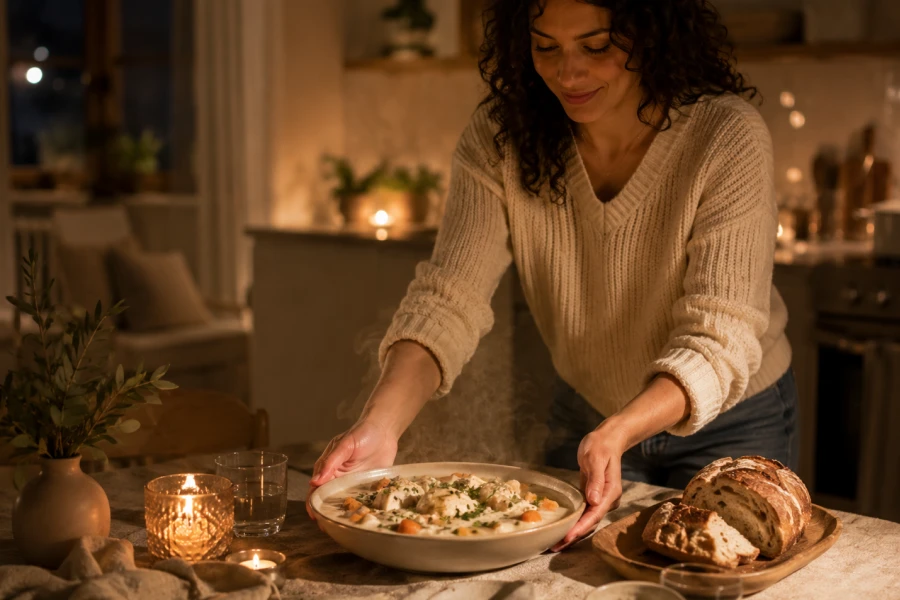
Comfort food meal inspiration is most useful when dinner needs to feel kind, not complicated. Some nights call for richness. Some need softness. Others need a meal that feels familiar after a messy day. The point is not to cook the biggest dish. The point is to choose something that settles the evening. Comfort food helps because it carries emotion through simple ingredients. It can make ordinary food feel generous. With nightly meal inspiration, you can plan from feeling first. That makes dinner more intuitive. It also makes cooking less tiring.
Comfort often begins with memory. You remember a soup from childhood. You picture something baked on a cold evening. You crave a sauce that feels familiar. These signals are useful. They tell you what kind of emotional texture the meal needs. From there, you can choose a practical version. A long braise can become a quick stew. A rich casserole can become a skillet bake. A holiday flavor can become a weeknight dinner. This keeps inspiration grounded. You honor the feeling without turning dinner into a project.
Comfort food does not have to feel overly rich. A warm grain bowl can be deeply comforting. A vegetable soup can feel grounding. Roasted carrots with yogurt can feel cozy. Soft eggs, toast, and greens can work beautifully. The emotional effect matters more than the heaviness. This opens more possibilities for everyday dinners. You can build comfort with warmth, aroma, and balance. Herbs also help. So do toasted nuts, slow-cooked onions, and gentle spices. Once you see comfort this way, your dinner options expand.
Family dinners need meals that feel welcoming to different appetites. Build around flexible dishes whenever possible. Bowls, soups, pastas, tacos, and tray bakes invite small adjustments. One person can add extra sauce. Another can keep toppings simple. This makes dinner feel calmer. It also reduces the pressure to please everyone with one perfect plate. Thoughtful family comfort dinners work because they leave room. They create togetherness without forcing sameness. That balance matters. It helps the meal feel shared and personal.
Some of the best cozy dinners start with leftovers. Cooked chicken can become soup, pot pie filling, or creamy pasta. Roasted vegetables can become a grain bowl. Stale bread can become croutons or savory strata. A little cheese can make vegetables feel complete. Stock, rice, eggs, beans, and potatoes can save the night. This is where a comfort cooking system becomes useful. You stop seeing scraps. You start seeing dinner foundations. That shift saves money and stress.
A simple meal can still feel abundant. Serve soup with bread and a crisp side. Add a warm sauce to roasted vegetables. Put herbs, cheese, or seeds on top. Use a bowl that feels satisfying in your hands. Let the meal look finished before it reaches the table. These details create generosity without requiring more ingredients. They also make quick dinners feel less rushed. A plate can feel comforting because it was assembled with care. That care is visible. It changes how people receive the food.
A calmer dinner routine grows from small repeatable decisions. Choose a few base meals that always work. Keep pantry ingredients for those meals nearby. Plan one flexible comfort dinner for your busiest night. Save more involved recipes for slower evenings. Use simple dinner choices as your anchor. This prevents decision fatigue from taking over. It also gives comfort food a steady role. Dinner becomes less dramatic. It becomes a dependable place to land.




Leave a comment
You must be logged in to post a comment.